
A middle-aged woman from an upscale neighborhood has it all.
Then, she loses it all.
DARCINE’S YEAR - CONCEPT AND HISTORY
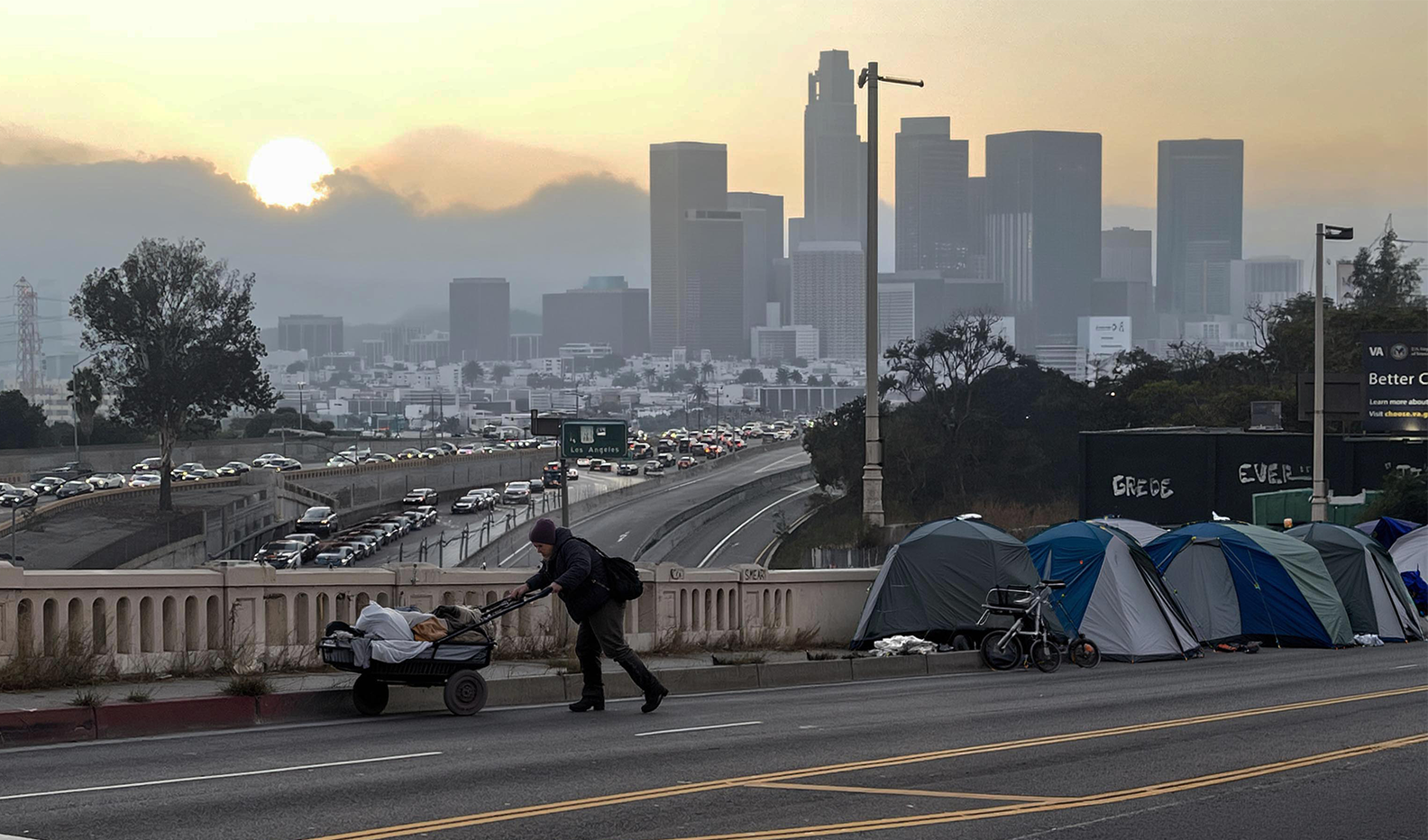
The genesis of this project is our short film, “Darcine’s Day,” a story about Darcine Thomas, an L.A. middle-class woman who’s had some bad luck, struggles to get back on her feet, and hits obstacles at every turn. The short film addresses issues of food insecurity, the high costs of living, and homelessness. The film screened at 92 U.S. and international film festivals, and audiences everywhere asked us:
“What happens next for Darcine?” and “I hope Darcine makes it.”
We’ve now expanded the story of Darcine Thomas into a feature-length script, and we are seeking production partners.
WRITER/DIRECTOR ARTISTIC STATEMENT
I have not experienced homelessness myself, but I have experienced the instinct to judge people who are struggling—the quick story we tell ourselves about “those people” on the corner, in public housing, in line for assistance. I’ve recognized bigotry, prejudice, and quiet condemnation in myself, and that realization is a big part of why I want to make this film. “DARCINE’S YEAR” is my attempt to turn that gaze back on us: the housed, the comfortable, the people who assume that losing everything only happens to someone fundamentally different from us.
Darcine is not an issue or a symbol; she’s someone who could be your coworker, your neighbor, your aunt. She begins as the person who would have judged “the homeless” from a distance, and over the course of the film, she becomes one of the people she used to look away from. Her slide toward homelessness isn’t about weakness. It’s about grief, bad luck, and the systems that are supposed to help. The film is honest about those realities, but it is never interested in punishing Darcine. My job as a director is to stay on her side—even when she can’t—and invite the audience to do the same.
This film sits alongside Moonlight, Nomadland, and The Dallas Buyers Club: intimate, naturalistic, rooted in faces and real locations. We start with warm, composed suburban images that illustrate stability. But as Darcine’s life unravels, the camera loosens. We move into cooler, harsher palettes of public housing and institutions; nights in the car lit by streetlights and neon. The closer Darcine gets to losing everything, the closer we get to her face.
This isn’t a misery parade or a pity party. It’s a quiet, compassionate portrait of a woman who, at one point, genuinely wants to die. But slowly, she accumulates enough small connections, victories, and acts of kindness that she can no longer fully believe her life is worthless.
There’s no miraculous rescue or a sentimental ending. No windfall, no savior, no third-act romance. There is a low-wage job and a moment when Darcine finally speaks up for herself and someone else. There is a woman standing alone with no status, no possessions, no safety net, yet deciding to keep going anyway.
That’s the journey I want to put on screen: a woman we might once have judged from a distance, but now seen so closely that, by the end, judging her and people like her becomes impossible.
Thank you,
Aaron Goffman
Darcine’s Year Feature Film Aaron Goffman